-
Our slogan 'reach your full potential’ shows our philosophy that everyone can become a successful pianist however will not always follow the same paths. Every one is different and therefore we adapt our methods and teaching for the individual to guaranty success.
All Students will also have access to our student area (ask during your lesson for the pass-code). There you will have access to many Resources such as DIY board games and activities s to have fun whilst learning for the whole family. As well as information to help you on your musical journey.
-
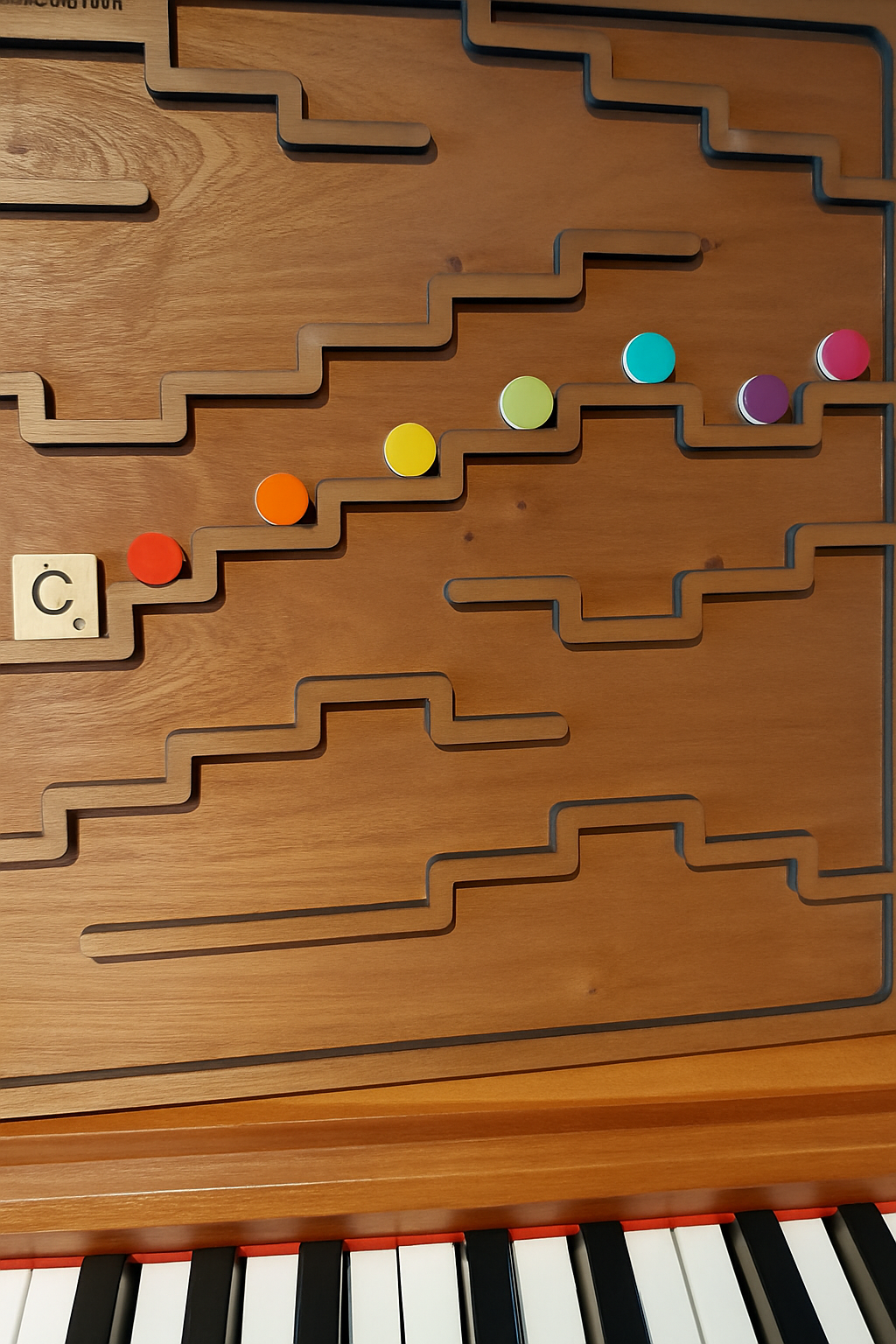
In order for success work practice, and focus must be put in at home and during lessons. But no one says you cant have fun whilst doing it! I truly believe enjoyment encourages commitment and motivation and so especially with the theory and technique I make informative but engaging with games and kinaesthetic activities.
As we truly tailor the learning to the individual I use a rang of different and possibly multiple methods tending to mix between Suzuki, Dogs & Birds, Piano Safari , Alfred's Basic Piano Course or Vamoosh series depending on what suits the learning style of the student . all these methods allow teaching reading music and playing piano in a logical and fun way without what i belive is a restricting emphasis on a fixed 'middle C' position.
-
For all students or future students click the link to access
Ultimate parents guide to your child’s success
for students following the suzuki method click the link for
-
Choosing a Piano for Home Practice
Regular practice between lessons is an important part of a student’s progress. From the very beginning, students should have access to a suitable piano at home so that they can become familiar with the instrument and develop good technique from the outset.
What type of piano is suitable?
An acoustic piano is preferred, as it allows students to experience the full range, sound, dynamics and natural key action of a traditional piano. Even a modest-quality acoustic piano can provide a more authentic playing experience than a basic electronic keyboard.
However, I understand that an acoustic piano is not always practical due to space, cost, maintenance or living arrangements. A good digital piano is an excellent alternative and can provide a very suitable instrument for home practice.
If you are choosing a digital piano, I recommend:
88 full-sized keys – the same range as a standard acoustic piano
Fully weighted keys – to provide resistance similar to an acoustic piano and support the development of good finger technique
Touch sensitivity – so that students can control the volume and expression of each note through the way they play
A proper piano pedal, particularly a sustain pedal
These features help ensure that students are learning on an instrument that responds in a way that is much closer to a real piano.
They’re Only a Beginner — Does It Really Matter?
Short answer yes! A small, lightweight keyboard with fewer than 88 keys or unweighted keys is not recommended for regular piano study.
Although these keyboards can be useful for musical exploration, they do not provide the same range, resistance or response as a piano. This can make it difficult for students to develop the correct technique and learn to control dynamics and tone effectively.
As students progress, an unsuitable keyboard can eventually become a limitation on their development, restricting the repertoire they can play and making it harder to develop the full range of skills expected of a pianist. Having a suitable instrument from the beginning therefore gives students the best opportunity to build strong foundations and continue progressing confidently.
If you are unsure what instrument would be suitable, please feel free to ask me before purchasing one. I am happy to advise you on suitable options for your space and budget.
-
I myself have published, designed and written a practice book this can be purchased in lessons to avoid shipping or from Amazon! click for more information
All Students will also have access to our student area(ask during your lesson for the pass-code). There you will have access to many free resouce and activities for the whole family as well as information to help you on your musical journey.
you will need adjustable chair or a chair where the arm is at 45° to the keyboard when playing
Piano Pedal Extenders are a great addition for our little pupils with growing legs ;) To make the pedals more accessible and to keep a good posture at the piano by having both feet on the ground.
Make Practice Fun with a Metronome! Help your child become a rhythm master while learning piano! A metronome keeps a steady beat, making practice more fun and focused. Here is a link for the brand I would recommend Wittner,
The classic :https://amzn.eu/d/j5U7DB6
Or you can get the cheaper, Wittner piccolo (small) :https://amzn.eu/d/fnRS6T0
We do not recommend putting stickers on the keys. If the student feels they need for additional support we would recommend - ‘Dogs and Birds piano tiles’ which are fully removable and customizable in order for learn without it becoming a crutch
APPS I would recommend as a professional pianist
Apps can be useful tools to make practice more engaging, but they should complement not replace regular piano lessons and practical practice . No app can fully replace the guidance, feedback and personal interaction of a teacher.
Note Rush is an app I myself regularly use as a teacher and one I would highly recommend for students wishing to improve there reading skills
Flash note a younger children’s version of note rush containing all the same content but designed for a younger audience
Hop To It! is a music sight-reading app designed for developing faster reading by practicing intervals. Created by experienced piano teachers.
-
We encourage parents to attend the lessons to understand the process and the practice needed. It is also a way of learning music for free for parents!
It helps if a parent or guardian helps support and encourage with their child's regular practice in between lessons regardless of age.
The younger the student, the more help they need between lessons. Although each family’s availability is different, we offer you all the support needed to be involved and informed as much as you can in your child’s musical journey.
-
Regular performance opportunities are crucial to overall musical development. It is my goal as a teacher to nurture each individual pupil and so I regularly host a winter student concert as well as encourage my students to take part in performances at their schools ,
I encourage and prepare students for competitive music festivals performance platforms and ABRSM examinations.
However it is key to keep in mind that ‘winning’ is not everything when comes to competing or examinations but more over for , the performance experience the sense of achievement and as a way to progress with goals to work towards.
For students following the Suzuki method who want a less pressured goal. the British Suzuki Institute (BSI) Graduation offers a wonderful alternative or complement to traditional ABRSM music exams
https://www.britishsuzuki.org.uk/pages/graduation
The BSI Graduation is a recognised achievement tailored specifically for Suzuki students.
for reference Level 1 Graduation is based on mastering Book 2, No. 4 in the Suzuki repertoire.
Successful students receive a badge, certificate and are invited to participate in special graduation concerts held at prestigious venues across Britain.
-
It is never too late to start learning how to play the piano!
Lessons are for everyone you can always take piano lessons for your pleasure and personal benefits.
Weekly tuition is the ideal scenario for every student, but some learners require more flexibility with lesson appointments.
Many people with busy family commitments, benefit from a fortnightly tuition plan. It is the perfect solution for students who wish to learn piano but whose schedule doesn’t allow them to commit to the same time and day every week.
Adapting and experimenting so all students succeed